

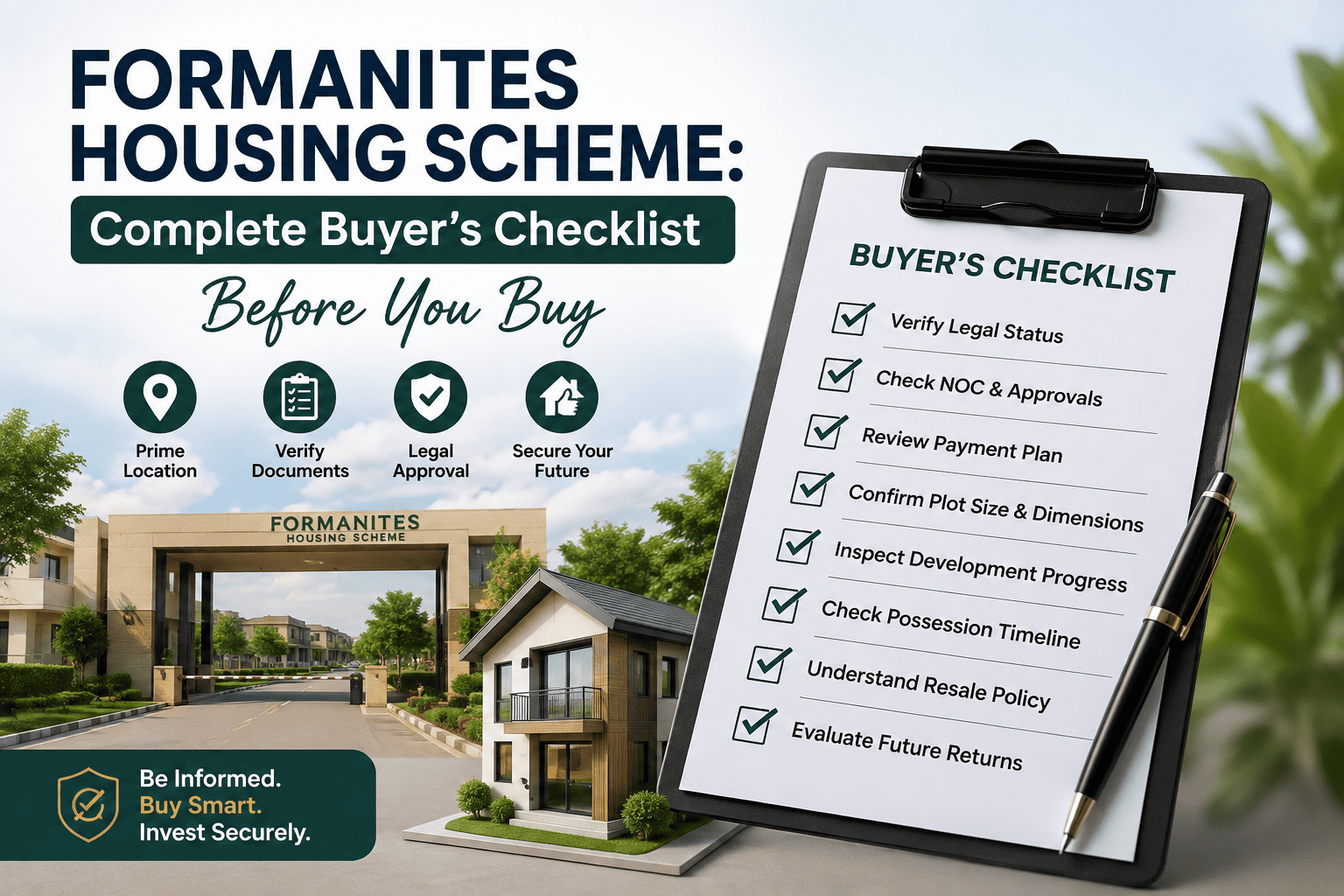
Formanites Housing Scheme: Complete Buyer’s Checklist Before You Buy
If you’re looking at property in Lahore, chances are you’ve heard about the Formanites housing scheme. It’s one of those names that comes up constantly when you’re searching for a plot, a house, or somewhere to settle long-term. But here’s the thing: just because a scheme sounds good doesn’t mean every plot in it is the same. Before you hand over money, you need to dig into the actual land records, check what’s been approved, see if there’s proper road access, understand what utilities are available, and review the transfer papers. Spending an afternoon on these checks now could save you from a huge headache later.globalheadlines24.comp
We reviewed guidance from the Lahore Development Authority and the Punjab Land Records Authority to put this together. The core message is simple but crucial: focus on the individual plot, not just the scheme name. The thing is, phases differ, land parcels vary, and approval stages change. So always ask for written proof before you commit to anything. Double-check everything before signing on the dotted line.
What is Formanites housing scheme?
When Lahore buyers talk about Formanites housing scheme, they’re usually referring to it as a residential area. However, one can get plots, constructed houses, and even resale property in Formanites housing scheme. The problem with this term is that the scheme name is not enough information about the legal status of each individual plot.
The LDA maintains an official record where the scheme name, location, date of approval, area, blocks, plot numbers, phase, and the list of plots with mortgage are mentioned. The approval applies to a particular scheme plan only. So, just because other properties in a similar name have been approved does not make every property in the name legal.
So, what you should do is request for phase, block, mouza, plot number and the approval reference number, and check if all of these fit with the LDA records. The record is better than a low price.
Location and access checks
Location isn’t just about what you like. It directly affects your daily life and, down the road, the value of your property. So visit the land several times and at different times of the day. The path may appear easy when plotted on the map but it can be extremely difficult to navigate during school hours and rush hours.
Walk the main road yourself. Check out the connected roads, the street widths, the drainage systems, the lighting systems, and public access to the property. Ensure that the location stated by the seller on the map corresponds with the actual location of the land, its approval plan, and land registration details.
Location questions to ask
| Check | What you should confirm |
| Main route | Road name and travel time |
| Plot position | Block, street, and plot number |
| Land boundary | Approved area and nearby parcels |
| Road access | Public road or private passage |
| Flood risk | Drainage and low-lying spots |
| Nearby needs | Shops, schools, clinics, and transport |
| Site visit | Daytime and evening conditions |
Take pictures when you visit. Note the time and exact location. These photos and notes help you verify what the seller says against what’s actually there.
Approval status needs a direct check
A lot of people just ask if a project is approved and call it good. That’s not enough. Go directly to LDA and get the actual file for your specific plot. A general answer won’t cut it.
LDA breaks approvals down into categories: technically approved, final, fully approved, and TMA approved. These mean different things. Find out what the approval stage actually means for your plot.
Check the plan, the land size, the mouza, the block, and the plot number. We recommend saving a copy of the record and writing down the date, since rules can shift over time.
Documents to compare before payment
| Document | What it helps you check |
| LDA approval record | Scheme name and approval stage |
| Approved layout plan | Blocks, roads, and plot position |
| Allotment letter | First allottee and plot details |
| Transfer letter | Sale history and current seller |
| Fard | Land area and recorded ownership |
| Registry | Registered transfer record |
| Dues clearance | Taxes, fees, and unpaid charges |
| Utility clearance | Meter or connection status |
This isn’t legal advice. If something doesn’t match up between documents, stop and get a lawyer or an official from the right office to look at it.
Verify ownership with land records
The Punjab Land Records Authority says the Fard is the official document that records land, location, and who owns it. PLRA also tells you that you can get a Fard through an Arazi Record Center, their online service, or through an Arazi Moawin center.
Take the seller’s CNIC and ownership papers. Compare the name, the amount of land, the location, and the plot details with what’s on the Fard. Don’t accept photocopies as final proof.
The allotment letter, transfer letter, registry, and Fard should all show the same owner and the same property. Don’t pay anyone until you’re 100% sure they can legally sell what they’re offering.
Plot sizes, houses, and construction plans
Treat each property as its own deal. Make sure the size in the paperwork matches what’s actually on the ground.
For a plot, check the length and width, whether it’s a corner plot, the road width, and if it’s level. Ask if any part sits on a designated road, a green space, a service strip, or land that’s off-limits.
For a house, compare the building plan with what’s actually built. LDA typically asks for proof of ownership, your CNIC, the building plan, an architect’s certification, proof you have possession, and evidence you’ve paid your fees. Ask for the plan, proof the building is done, recent utility bills, and any NOC you might need.
Utilities and on-ground development
Don’t assume utilities will just show up. What’s promised for the future isn’t the same as what’s working now. Go to the street and actually look. Check if there’s electricity, water, sewerage, drainage, gas, and garbage collection. Ask people who live there how often these services actually work.
If it’s a house, grab copies of recent utility bills. If it’s a plot, ask about infrastructure, site prep work, and any development charges. Get everything in writing. Here’s a tip: visit the location at least twice. Go once during the day and once in the evening so you see how the area actually functions at different times.
Transfer process and buyer paperwork
According to LDA, transferring a plot usually needs ID verification for both buyer and seller, photos of both, proof of ownership, forms, transfer fees, stamp duty, and CVT paperwork. The exact list can depend on the specific property and current office procedures.
Find out who’s filing the paperwork and where the deal gets recorded. Keep copies of everything: the agreement, proof of payment, the seller’s documents, the transfer records, and all receipts.
Also ask about any mortgages on the property, disputes, unpaid dues, or past transfers. The LDA records include mortgaged plots. Never let a seller push you into rushing.
A safer buying sequence
Follow these steps in order. Visit the site, collect the papers, check everything against the LDA and PLRA records. Then ask for a written price and dues statement.
Only sign once the title and approval check out. The agreement should spell out the plot, the price, payment dates, who’s buying and selling, when it’s due, and what happens if there’s a problem with the paperwork.
Pay in a way that creates a paper trail. Stay away from large cash payments with no receipt. Get expert help if things get complicated.
Buying steps at a glance
| Step | Action | Stop if… |
| 1 | Visit the exact plot or house | The location is unclear |
| 2 | Collect ownership papers | The seller avoids sharing them |
| 3 | Check LDA records | The plan or stage does not match |
| 4 | Check Fard and registry | Names or areas conflict |
| 5 | Check dues and utilities | Charges remain unexplained |
| 6 | Review the agreement | Key terms are missing |
| 7 | Pay through a traceable method | You face pressure for cash |
Keep it simple. This approach prevents most problems.
Common red flags
Watch out for sellers who only give you a file number, a photo from social media, or a pin on a map. Ask where that information came from and request an updated official record.
A price that seems too good to be true? It usually is. Low prices often mean unpaid dues, tough access, a legal dispute, or land outside the plan boundaries. Good paperwork matters more than a quick deal.
Don’t pay just because the seller says someone else is waiting in line. Write everything down: the delivery date, what utilities you’re getting, what roads will be built, all the fees. Get it in the agreement.
Common questions
Is Formanites housing scheme approved?
Check the specific scheme, phase, block, and plot against the latest LDA records before you rely on any approval statement.
Where is Formanites housing scheme located?
Figure out the location using the approved plan, the mouza name, the plot number, and a visit to see it in person. Don’t just use a shared map link.
What documents should I check before buying?
Look at the LDA record, the approved plan, the allotment or transfer letter, the Fard, the registry, the seller’s CNIC, and proof that all dues are paid.
Can I buy a plot without checking Fard?
You really shouldn’t. PLRA says the Fard gives you the land size, location details, and ownership information you need to verify.
Are utilities available in every block?
Not necessarily. Visit the actual street and ask for recent bills or written confirmation that connections are available.
What is needed for an LDA plot transfer?
LDA typically needs both parties’ IDs, ownership proof, photos, declarations, transfer fees, stamp duty, and CVT.
Should I pay a token before document checks?
No. First verify that the seller actually owns the property, check the plot’s official record, confirm the approval status, and make sure there are no unpaid dues.
Final thoughts
Formanites housing scheme might look perfect when you find a plot or house that fits your budget. But a smart buy rests on solid proof. Look closely at the plot, compare all the paperwork, and visit in person before talking about the final payment. It takes time, but it protects your money and your future.
We think buyers should value real paperwork over a fast deal. Ask LDA and PLRA questions, keep your records, and bring in someone who knows the law when something doesn’t add up. You might miss out on one opportunity by being careful, but you’ll dodge much bigger problems down the line.
Visit the property yourself and get its current approval and ownership records. Follow Global Headlines 24 for straightforward Lahore property updates and buyer tips.